Target Clearance Schedule 2026 (UPDATED)
The viral Target markdown schedule you’ve seen online? It’s from 2012, and it doesn’t work anymore. That’s the hard truth.
Target completely restructured how it handles clearance markdowns over the past 14 years. Supply chains evolved, inventory management shifted to store-by-store strategies, and the old one-schedule-fits-all approach died.
But the myth lives on, recycled across blogs and social media, sending shoppers hunting for deals on the wrong days.
Key Takeaways
- Target uses a 30% → 50% → 70% markdown progression, but timing varies dramatically by store location and product category.
- Price endings like $0.04 and $0.08 signal final markdown status, items won’t drop further, so buy immediately if you see these.
- Only seasonal markdowns activate automatically; everything else requires manual store scanning, meaning the best deals go to shoppers who hunt.
Why the 2012 Schedule Doesn’t Work
All Things Target explicitly states that the March 2012 markdown schedule is no longer used.
That schedule promised specific days for specific departments: Wednesdays for men’s clothing, health, beauty, and lawn/garden; Thursdays for housewares, lingerie, shoes, and toys.
It was clean. It was predictable. It’s also completely dead.
Target abandoned this uniform, company-wide approach because retail fundamentally changed.
Supply chain disruptions, inventory management software improvements, and the shift toward localized markdown strategies made a national schedule obsolete.
What works for a Target in Denver doesn’t necessarily work for one in Miami.
The schedule persists because it was shared everywhere, blogs, Reddit, TikTok, Instagram, creating a misinformation loop that’s hard to break.
People still cite it in 2026 as if it’s gospel.
If you follow the 2012 schedule, you’ll shop on wrong days and miss your store’s actual clearance windows.
The 30%-50%-70% Markdown System
Target’s current clearance system works in three tiers:
- 30% off
- 50% off
- 70% off final markdown
Items don’t automatically progress through these tiers on a set schedule. Instead, progression depends on:
- Inventory velocity
- Category performance
- Real-time sales data
A hot item like a Shark PowerDetect vacuum might jump from 30% straight to 70% off in two weeks because it’s not selling.
A slow-moving clothing item could linger at 30% off for four to six weeks before advancing.
Some items never reach 70% at all, they either sell through at earlier discounts or get returned to regular stock.
The key insight: progression is driven by inventory levels, not calendar dates.
Target’s system automatically flags items that aren’t moving and accelerates their markdown timeline.

What $0.04 and $0.08 Price Endings Mean
When you see a price ending in $0.04 or $0.08 (like $9.04 or $14.08), that’s a signal: final markdown.
These specific endings are programmed into Target’s POS system to flag items that won’t drop further.
Buy Immediately If You See:
- Prices ending in $0.04
- Prices ending in $0.08
This is one of the few reliable clearance signals available to shoppers.
If you spot these price endings, buy immediately without waiting for another markdown.
The item is at its absolute lowest price.
Finding Your Store’s Clearance Pattern
Target acknowledges that markdown schedules vary by location, but the company doesn’t publish store-specific schedules.
You have to discover your local pattern yourself.
Step 1: Read the shelf tags
Target’s clearance tags display the markdown date in small print.
Track which dates appear on items over two to three weeks.
Step 2: Ask store associates directly
Approach a department manager and ask:
What day does your department typically get markdowns?
Many associates know their local schedule and will tell you.
Step 3: Monitor prices on the Target app
Check the same item’s price daily or weekly for four to six weeks.
Step 4: Track departments separately
Your store might mark down clothing on Wednesdays but home goods on Fridays.
Step 5: Check Reddit r/Target
Search for posts from employees at your store or region.
Many Target workers share local markdown timing in comments.
Reading Clearance Tags Like a Pro
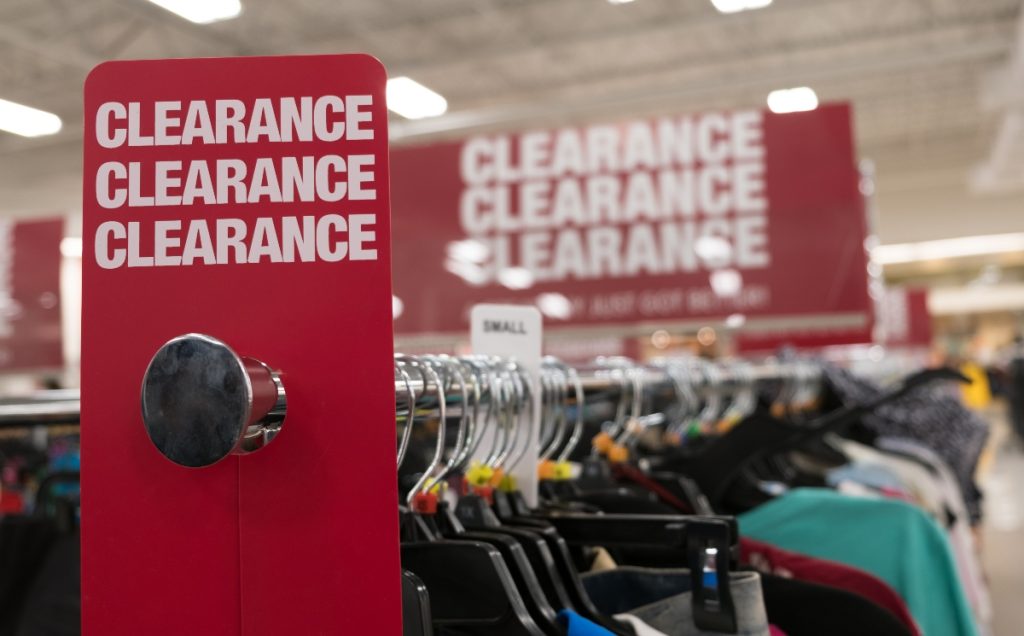
Clearance tags show the markdown date, the day the item was discounted, not when it will be discounted again.
Use this date to estimate when items might advance to the next tier.
If an item was marked down on June 1 at 30% off, and your store typically advances items every two weeks, estimate the 50% markdown around June 15.
Comparing multiple items’ markdown dates reveals your store’s rhythm.
Seasonal Clearance Timing in 2026
Seasonal items are the exception to the “no automatic markdowns” rule.
Spring/Summer Clothing
- Marked down starting late July through August.
- Items reach 70% off by late August or early September.
Fall/Winter Clothing
- Clearance begins in January-February.
- Final markdown by late February or early March.
Holiday Items
Christmas, Halloween, Easter, and Thanksgiving items begin clearance the day after each holiday and reach 70% off within two t,o four weeks.
Seasonal Home Décor
- Summer outdoor items clear June-July.
- Fall décor clears September-October.
- Winter décor clears January.
Target begins clearancing seasonal items six to eight weeks before the season ends.
Target.com vs. In-Store Clearance
This is a critical gap most shoppers miss: Target.com and physical stores operate on completely separate clearance schedules.
A markdown that happens in-store on Tuesday might not happen online until Friday, or might not happen at all.
Important Differences
- Target.com markdowns are driven by warehouse inventory.
- Physical store markdowns are driven by local inventory.
- Online clearance often skips the 30% tier.
- Digital markdowns can happen any day of the week.
Use the Target app’s price alert feature to monitor specific items on Target.com without visiting stores.